

Riding Lesson Barn vs Private Trainer for Your Rider
Compare a riding lesson barn vs private trainer to find the right setting for safe, steady equestrian progress, better horsemanship, and confidence too.
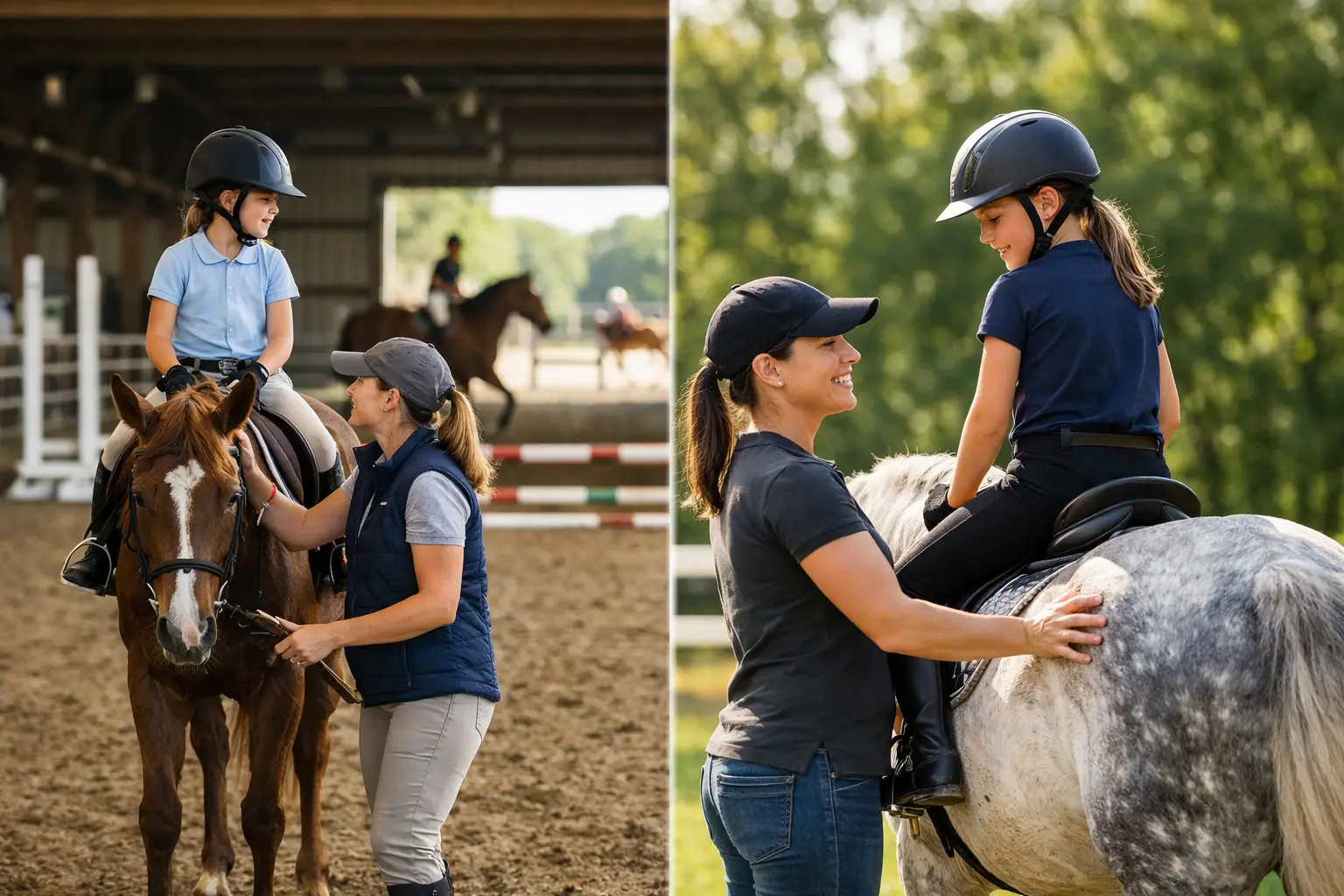
A child may come home from one lesson thrilled that she trotted independently for the first time, while another rider leaves feeling unsure because the instructor had to divide attention among six students. That difference is often at the center of the riding lesson barn vs private trainer decision. Both settings can offer valuable experiences, but they are designed for different levels of attention, structure, and rider development.
For families and adult riders, the best choice is rarely about finding the busiest schedule or the lowest price. It is about finding an environment where safety, instruction, horse care, and goals are aligned. A rider who wants occasional recreation may thrive in one format, while a rider building confidence, correct fundamentals, or competition skills may need another.
Riding Lesson Barn vs Private Trainer: The Core Difference
A traditional lesson barn typically teaches multiple students throughout the day, often using a rotation of experienced school horses. Lessons may be private, semi-private, or group-based, and the program can provide a lively social setting with many riders coming and going.
A private trainer, particularly in a boutique program, generally works with fewer riders and develops instruction around the individual horse-and-rider pair. The focus is not simply on getting through a lesson plan. It is on observing how a rider learns, identifying habits early, and adjusting exercises as confidence, balance, and goals develop.
Neither model is automatically right or wrong. The question is whether the level of coaching matches what the rider needs now. A beginner who is nervous around horses, for example, benefits from clear supervision on the ground before ever worrying about steering at the trot. An experienced rider may need detailed feedback on position, flatwork, course strategy, or their horse's way of going.
When a Lesson Barn Can Be a Good Fit
A well-run lesson barn can introduce riders to horses in an energetic, community-oriented setting. Group lessons can be especially appealing to children who are motivated by friends and enjoy the shared excitement of learning alongside peers. They can also give new families an accessible way to decide whether riding is an activity their child truly wants to pursue.
The best group environments still maintain thoughtful class sizes, appropriate horse matches, and a clear safety process. Riders should not be left waiting long periods without instruction, and beginners should not be asked to perform skills before they understand the basics of handling, balance, and communication.
This format may suit a rider who wants a regular recreational activity, enjoys a social atmosphere, and is comfortable progressing at a pace shaped partly by the group. It can also work well for a rider who already has a solid foundation and benefits from practicing patterns, transitions, and arena etiquette around others.
There are trade-offs. When one instructor is responsible for several riders, coaching time is naturally divided. A rider who quietly struggles with heels creeping up, hands becoming unsteady, or anxiety around a particular horse may not receive the immediate, repeated correction that prevents small issues from becoming habits.
Why Private Instruction Changes the Learning Experience
Private instruction gives the trainer the opportunity to teach the rider in front of them, not the average rider in a class. One child may need extra time learning how to lead and groom safely. Another may understand horsemanship quickly but need help developing an independent seat. An adult returning to riding after years away may need a calm, measured plan that rebuilds confidence without pressure.
In a one-on-one lesson, the trainer can make adjustments in real time. If a rider is losing balance in the canter, the lesson can pause and return to exercises that strengthen the rider's position. If a horse is having an unusually energetic day, the trainer can modify the plan to keep the session productive and safe. That responsiveness is difficult to replicate in a larger class.
Private lessons also make progress easier to track. Rather than measuring success only by whether a rider can move into the next group, the trainer can set meaningful milestones: maintaining a consistent posting rhythm, steering accurate figures, understanding correct grooming, riding a balanced transition, or preparing for a first crossrail course.
For serious riders, this focused attention becomes even more valuable. Jumping and dressage both reward correct basics. A trainer who knows the rider's strengths, the horse's training needs, and the pair's long-term goals can build a more intentional program than a one-size-fits-all weekly lesson.
Private Does Not Mean Isolated
Some families worry that private lessons will feel less social. In reality, a thoughtfully managed smaller program can still offer connection through camps, horsemanship classes, shared barn responsibilities, clinics, and age-appropriate group opportunities. The difference is that social time does not have to replace individualized coaching.
Young riders often build stronger friendships when they share a respect for horses and understand that barn community includes responsibility. Helping with grooming, learning why tack fit matters, and watching more experienced riders are all part of becoming a capable horseperson.
Consider the Horse as Carefully as the Rider
The riding lesson barn vs private trainer conversation should always include the horses. Lesson horses are teachers, and their well-being directly affects the quality and safety of instruction. A patient horse that is asked to carry too many riders in a day may become sore, dull, resistant, or stressed. A horse with appropriate rest, attentive care, and carefully matched riders can continue teaching with confidence.
Ask how horses are selected for lessons, how often they work, and whether the program accounts for their physical condition and temperament. Clean stalls, turnout, quality feed, thoughtful conditioning, and professional oversight are not separate from the riding experience. They support it.
For owners, individualized training is equally important. A horse in a training program should not be managed as though every horse has the same body, temperament, or education. The right trainer considers soundness, fitness, behavioral patterns, and the owner's goals while communicating clearly about the horse's progress.
Questions That Reveal the Right Program
Before committing, observe a lesson if possible. Watch what happens before the rider gets in the saddle. Are helmets required and fitted properly? Are children supervised while grooming and leading? Does the instructor explain why riders are doing an exercise, or simply call commands from the center of the arena?
Pay attention to the quality of feedback. Useful instruction is specific and encouraging: shoulders back, soften the inside rein, look where you are going, or take a breath before asking for the trot. Vague praise has a place, but riders improve when they understand what changed and why it worked.
It is also reasonable to ask about the trainer's experience, lesson structure, cancellation policies, and how progress is evaluated. Parents should feel comfortable discussing a child's fears, attention span, goals, and schedule. Adult amateurs should be able to share whether they want relaxed weekly riding, a lease, help with a personal horse, or a more competitive path.
Choosing for the Season You Are In
The right setting can change over time. A young child may begin with a low-pressure introduction to horses and later benefit from private coaching as skills and commitment grow. A rider who has spent years in groups may choose private lessons to refine position or work toward jumping and dressage goals. Conversely, a private student may enjoy adding a carefully selected group activity for camaraderie and practice riding around others.
What matters is that the program does not rush the rider for the sake of a timeline. Confidence built on correct fundamentals lasts longer than confidence borrowed from being pushed ahead too quickly. Riders should feel challenged, but they should also leave understanding what they accomplished and what they are working toward next.
At Eden Hills Equine, that individualized approach supports riders from their first grooming lesson through more advanced English riding goals. In a smaller, attentive setting, families can expect coaching that values safety, horsemanship, and steady development alongside the joy of spending time with horses.
Choose the place where your rider is known by name, their questions are welcomed, and their progress is noticed. The right instruction does more than teach a rider how to steer. It gives them the patience, responsibility, and confidence to become a thoughtful horseperson.