

What Age Can Kids Start Riding Horses?
Wondering what age can kids start riding horses? Learn how age, maturity, balance, and safety shape the right time to begin lessons.
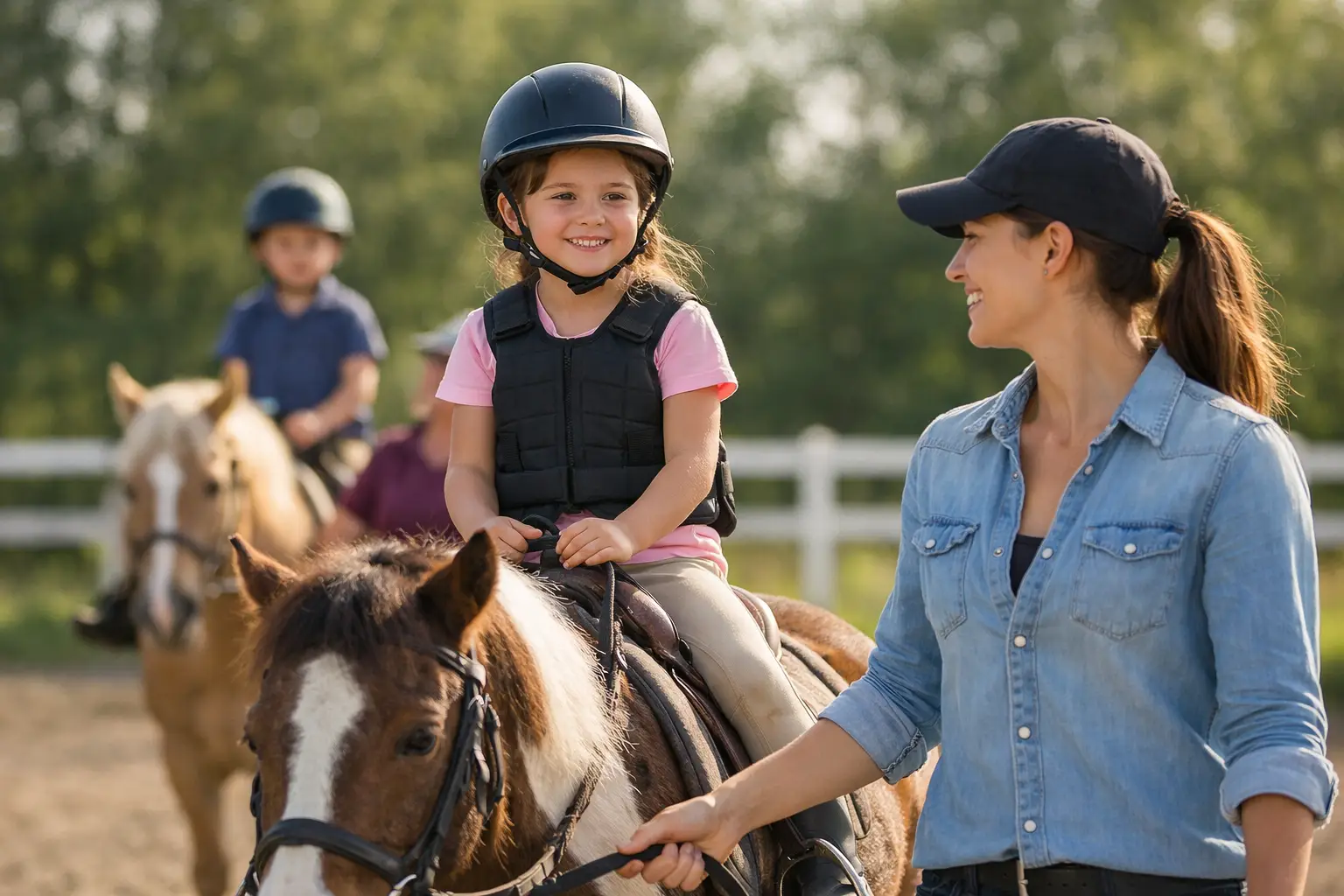
One of the first questions parents ask is what age can kids start riding horses, and the honest answer is that there is no single number that fits every child. Some children are ready for a structured introduction at four or five, while others benefit from waiting until six, seven, or older. The better question is not simply age. It is whether a child is physically coordinated, emotionally ready, and able to learn safely in a horse environment.
That distinction matters. Riding is not just sitting on a horse and being led around. A quality lesson program teaches balance, listening, body awareness, respect for the animal, and basic horsemanship from the start. For young children, readiness often matters more than enthusiasm alone.
What age can kids start riding in real lessons?
Many children can begin around age four to six with short, private, well-supervised sessions. At that stage, lessons should be designed around attention span, confidence, and safety rather than big riding goals. A very young beginner may spend part of the lesson learning how to approach a horse, hold the reins, sit correctly, and understand simple directions.
By age six to eight, many kids are better able to follow multi-step instructions, manage their emotions, and develop the coordination needed to make steady progress. That does not mean younger children cannot start. It simply means the lesson format needs to match the child.
Older beginners often progress quickly because they can process feedback more easily and have stronger balance and focus. A seven-year-old first-time rider and a ten-year-old first-time rider may both be beginners, but their lesson plans usually look different.
Signs a child is ready to start riding
Parents often assume readiness is mostly about size. In practice, maturity tends to tell you more. A child does not need to be fearless, but they do need to be able to listen, stay calm, and respond to instruction.
A good early candidate for riding lessons can usually separate from a parent without distress, follow simple directions, and stay attentive for at least 20 to 30 minutes. Basic body control also helps. If a child can sit upright, balance reasonably well, and coordinate hands and legs, that creates a safer and more productive starting point.
Interest matters too, but it should be the kind of interest that lasts longer than a single pony-themed phase. Horses are wonderful teachers, but they are large animals, and learning to ride well takes patience. Children who are curious, respectful, and willing to repeat basic skills often do best.
When waiting is the better choice
Sometimes the right answer is not yet. That is not a failure, and it does not mean a child will not become a strong rider later.
If a child struggles to follow directions consistently, becomes overwhelmed easily, or has a very limited attention span, formal lessons may feel frustrating rather than confidence-building. In those cases, a slower introduction can be better. Time spent around horses, learning grooming routines, practicing barn manners, or watching a lesson can lay an excellent foundation before riding begins.
There is also a physical side to consider. Very young children may love horses but still lack the core strength and balance needed to ride independently in a meaningful way. A skilled instructor can spot that quickly and shape the experience accordingly.
Why private instruction matters for young beginners
For children just starting out, especially younger ones, private lessons often make the biggest difference. A child who is five does not learn the same way a child who is nine learns. Even two children of the same age can have very different confidence levels, coordination, and pacing.
One-on-one instruction allows the trainer to keep the lesson calm, focused, and age-appropriate. That can mean adjusting how long the child rides, how much information is introduced at once, or whether part of the session should happen on the ground rather than in the saddle.
It also supports safety. Young riders need close supervision not only while mounted, but while leading, grooming, and learning how to behave around horses. In a more personalized setting, those habits are taught with care instead of rushed through.
Riding ability develops in stages
Parents sometimes picture a starting age as a major milestone, but riding is usually better understood as a progression. A young child may begin with simple mounted balance work and basic horse handling. Over time, that can grow into steering, posting the trot, learning patterns, and developing real independence.
This gradual approach protects confidence. Children who are pushed too quickly can become anxious, while children who are taught in steady stages often develop a stronger seat and better instincts. The goal is not to hurry them to the next skill. The goal is to build a rider who is secure, thoughtful, and capable.
That is especially true in English riding disciplines, where position, balance, and feel matter from the very beginning. Good basics are never wasted time.
What parents should expect from a first lesson
A first lesson for a child should feel structured, calm, and clear. It may begin with meeting the horse, learning safe approach zones, and understanding a few simple barn rules. Depending on the child, the mounted portion may be fairly short.
That is normal. Early lessons are often about comfort, trust, and routine. A child might practice stopping, starting, holding the reins, and finding balance at the walk. If the lesson is well designed, they leave feeling successful without being overloaded.
Parents should also expect horsemanship to be part of the process. Riding skill and horse knowledge grow together. Learning how to groom properly, stand safely near the horse, and understand basic horse behavior creates a better rider over time.
Safety depends on more than age
When families ask what age can kids start riding, safety is usually the real concern underneath the question. That concern is valid, and the answer depends on more than a birthday.
Safe instruction comes from the whole environment: suitable lesson horses, attentive trainers, well-maintained equipment, and a program that does not ask beginners to do more than they are ready for. It also comes from matching the horse to the rider. A quiet, experienced school horse can help a child build confidence in a way that an unsuitable mount never will.
Facilities matter as well. Thoughtful ranch design, clear routines, and direct instructor oversight reduce unnecessary stress and confusion for young riders. Children learn best when the environment feels organized and predictable.
Every child starts differently
There is a wide range of normal when it comes to beginner riders. Some children are eager but cautious. Others are naturally bold but need help slowing down and listening. Some talk constantly through a lesson, while others say very little and still absorb everything.
A strong program takes those differences seriously. It does not treat all young beginners as interchangeable. Instead, it looks at the whole child - confidence, focus, coordination, emotional regulation, and goals - and builds from there.
That is one reason families often appreciate a more individualized approach. At Eden Hills Equine, the emphasis on private instruction and horsemanship education reflects this reality. Real progress happens when the teaching matches the rider, not when the rider is expected to fit a generic lesson model.
So, what age can kids start riding?
For many children, ages four to six can be an appropriate time to begin a careful introduction to riding. For others, six to eight is the age when lessons become more productive and enjoyable. And for some children, starting later is exactly what allows them to thrive.
The best starting age is the one that supports confidence, safety, and a positive relationship with horses. If a child is curious, able to listen, physically steady enough for beginner work, and taught in a thoughtful environment, they may be ready to start. If they are not quite there yet, a little more time can be a very wise investment.
Children do not need to start as early as possible to become excellent riders. They need a beginning that is safe, well-timed, and built around real learning. When that foundation is in place, riding becomes more than an activity. It becomes a meaningful education in balance, responsibility, and trust.