

When Should Riders Start Jumping Safely?
When should riders start jumping? See readiness signs, safety foundations, and lesson approaches that build confident, capable equestrians with care.
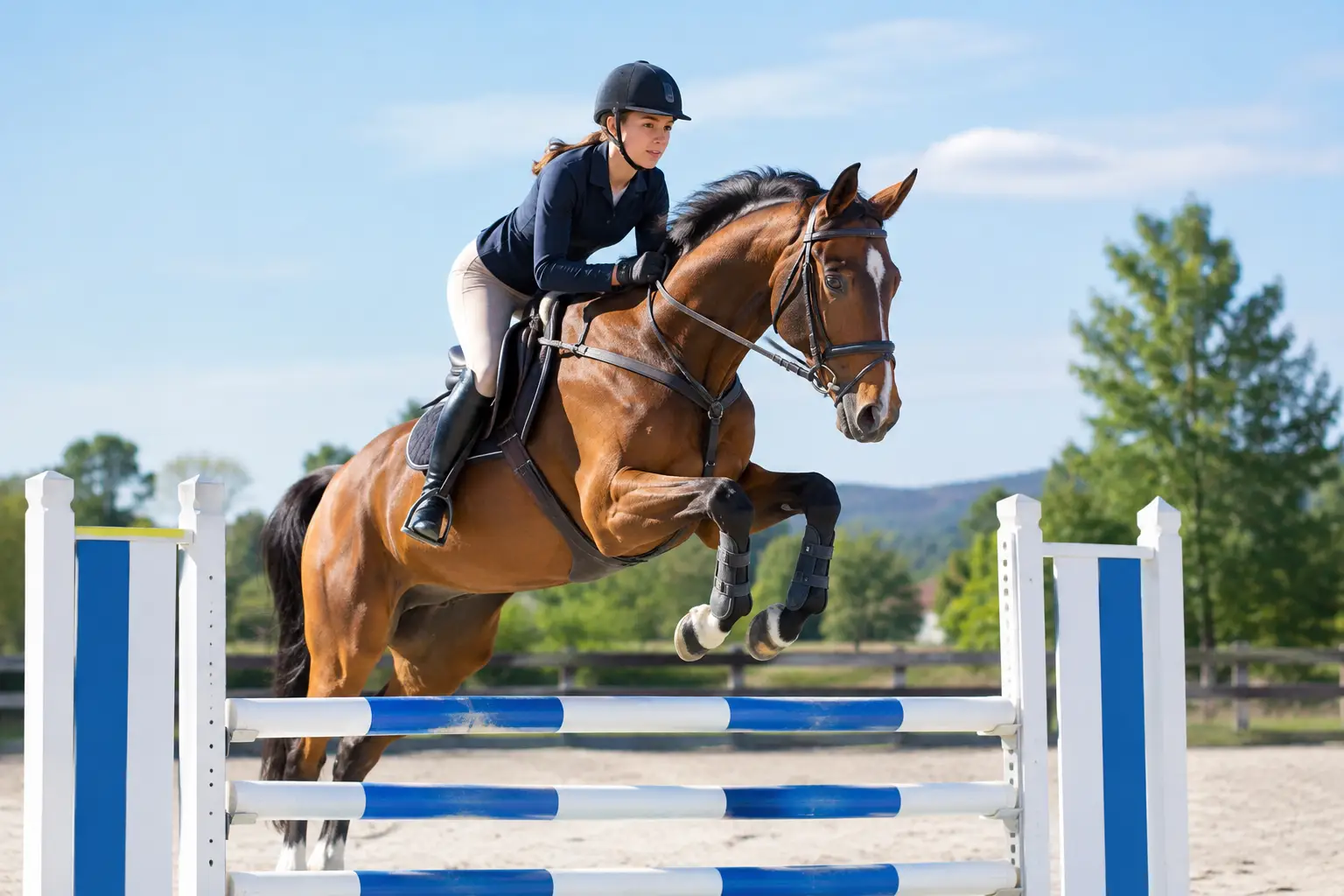
Parents often ask, “When should riders start jumping?” The honest answer is not tied to a birthday, a certain number of lessons, or a rider’s enthusiasm for going over fences. Jumping begins when a rider has the balance, control, understanding, and confidence to make the experience safe and constructive for both horse and rider.
For some students, that point comes sooner than expected. For others, more time on the flat creates a much better foundation. At Eden Hills Equine, individualized instruction allows progress to be based on the rider in the saddle, the horse underneath them, and the skills both need next - not a preset timeline.
When Should Riders Start Jumping? Look Beyond Age
A child may be ready to ride over a ground pole at an early stage, while a teen or adult beginner may need more time to develop a secure position. Neither timeline is better. A rider who starts later with strong basics will often progress more comfortably than someone who begins jumping before they can stay balanced through a transition or turn.
Age can affect attention span, coordination, and a rider’s ability to follow multi-step directions, but it is only one consideration. More useful questions include: Can the rider steer accurately? Can they maintain an even rhythm? Do they understand how to ride safely in a shared arena? Can they regain their position after a small mistake without becoming frightened or pulling on the horse?
Jumping is not simply sitting still while a horse goes over an obstacle. The rider must stay centered, allow the horse to use its neck and back, look ahead, and continue riding after the fence. Those skills are built gradually through thoughtful flatwork.
The Foundation Comes Before the Fence
Before a rider jumps a course, they should be reasonably secure at the walk, trot, and canter for their level. They do not need to perform advanced dressage movements, but they should be able to maintain a balanced position without relying on the reins for support.
An independent seat and quiet hands matter especially as a horse changes its stride or lifts over an obstacle. A rider who tips forward, catches the horse in the mouth, or loses steering may make a small fence uncomfortable for the horse. That does not mean the rider has failed. It simply means more preparation on the flat will make the first jumping experiences more positive.
Basic skills that often signal readiness include being able to:
- Ride a consistent rhythm at the walk, trot, and canter.
- Steer on simple lines and around turns with purpose.
- Hold a light two-point position without gripping or balancing on the reins.
- Adjust position after transitions, changes of direction, or a moment of lost balance.
- Listen, respond, and remain calm when the instructor gives directions.
These abilities develop at different rates. A rider may have a beautiful two-point but still need help maintaining steering. Another may canter confidently but need more practice softening their hands. Private lessons are particularly valuable here because the instructor can identify the specific skill that needs attention rather than moving a rider forward because the group has reached a jumping unit.
Two-Point Is More Than a Pose
Many new riders associate jumping readiness with the ability to stand in the stirrups. A correct two-point, however, is a functional position: weight is supported through the leg, the hip closes softly, the rider’s upper body remains stable, and the hands can follow the horse’s motion.
Riders can practice this position in short intervals at the walk and trot, then over poles, before adding a fence. The goal is not to hold two-point for as long as possible. It is to develop balance that remains effective when the horse changes pace, rounds a corner, or steps over an obstacle.
Start With Poles and Cavaletti
The first stages of jumping usually do not look like jumping at all. Ground poles teach riders to approach straight, keep an even rhythm, look ahead, and allow the horse to step through without interference. They also give horses a clear, low-pressure way to practice their own footwork.
Cavaletti and raised poles add another layer. A horse must lift its feet more deliberately, while the rider learns to stay quiet and centered through a small change in motion. These exercises can reveal whether a rider is rushing toward the obstacle, looking down, collapsing to one side, or losing control after it.
Only when poles and cavaletti are calm and consistent does it make sense to introduce a very small crossrail or vertical. The first fence should feel almost uneventful. It is a chance to confirm that the rider can approach in balance, allow the horse to jump, and continue straight ahead afterward.
That quiet beginning matters. A rider who repeatedly has safe, understandable early experiences is more likely to develop confidence based on skill rather than bravado.
Horse Selection Is Part of Rider Readiness
Even a well-prepared rider needs an appropriate horse. A suitable school horse for beginning jumpers is patient, educated, and predictable, with the experience to help a rider learn without taking advantage of their inexperience. The horse should be comfortable with poles, small fences, transitions, and the occasional imperfect approach that naturally happens while a rider is learning.
This is one reason jumping instruction must consider the pair, not just the rider. A confident horse can help a novice understand rhythm and direction. A sensitive or green horse may need a more advanced rider with steady aids and better timing.
The horse’s condition also matters. Soundness, fitness, tack fit, and warm-up should be addressed before asking any horse to jump. Good horsemanship means seeing the fence as one small part of the horse’s overall care and training.
What a Safe First Jumping Lesson Looks Like
A safe introductory jumping lesson is not measured by fence height. It is measured by the rider’s understanding and the quality of the work before and after each obstacle.
A lesson may begin with grooming and tack checks, followed by a warm-up at the walk and trot. The instructor will typically review steering, stopping, transitions, and two-point before using ground poles. If the rider is balanced and the horse is moving forward calmly, the instructor may introduce a small obstacle on a simple, straight line.
The rider should know where to look, how to keep their leg softly on, and what to do after landing. Often, the best instruction is simple: establish rhythm, look ahead, stay centered, and let the horse do its job. Too many corrections at once can overwhelm a new jumper.
Riders should also wear an approved riding helmet every time they ride. Appropriate boots, properly fitted tack, and a well-maintained arena are practical parts of a safety-first program. As riders advance, they may choose additional protective equipment based on their discipline, goals, and instructor guidance.
Signs It May Be Too Soon
There is no harm in waiting. In fact, choosing to spend more time on flatwork can prevent fear, confusion, and poor habits that take longer to correct later.
A rider may benefit from more preparation if they regularly lose balance in the canter, pull on the reins to stay secure, struggle to steer consistently, or become anxious when the horse changes pace. It may also be too soon if the rider cannot yet follow arena rules or respond promptly to safety instructions.
Sometimes the issue is not physical skill but confidence. A rider who is nervous around poles does not need to be pushed over a fence. Patient repetition at a comfortable level can turn uncertainty into trust. The goal is to stretch a rider’s ability without creating an experience that feels frightening or out of control.
Progress Is Not a Straight Line
Once riders begin jumping, development is rarely linear. A student may confidently jump a small crossrail one week and need to return to poles the next because they are working on rhythm, a new horse, or a stronger position. That is not moving backward. It is responsible training.
As skills become more reliable, riders can add turns, simple lines, related distances, and eventually small courses. Fence height should be the last variable to increase, not the first. A rider who can accurately ride a balanced course of small fences is building skills that will serve them far beyond their first jumping lessons.
For parents, the most encouraging measure is not how quickly a child reaches a certain height. Watch for quieter hands, better posture, thoughtful horse care, increased focus, and the ability to explain what they are practicing. Those are signs of a rider becoming a horseperson.
A good first jump should leave a rider eager to learn more and a horse comfortable doing its job. When the foundation is in place, the fence becomes less of a leap and more of a natural next step.