

Youth Rider Responsibility Starts at the Barn
Learn how youth rider responsibility builds safer habits, stronger horsemanship, and lasting confidence through thoughtful guidance at the barn each day.
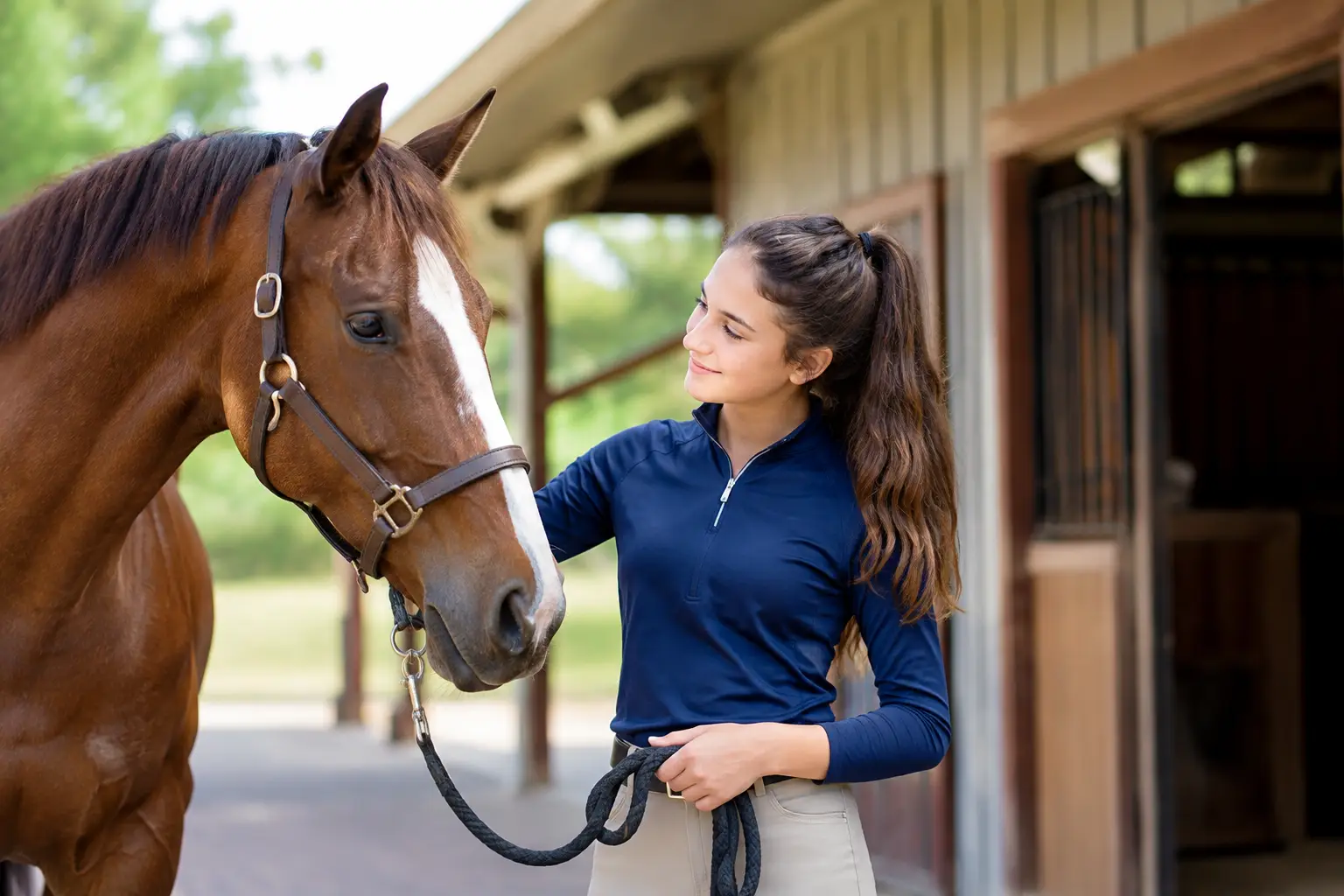
A young rider who remembers to fasten a halter correctly, notices an empty water bucket, or asks before entering a stall is learning far more than barn chores. Youth rider responsibility is the foundation of safe, thoughtful horsemanship. It helps children understand that riding is a partnership with a living animal whose comfort, safety, and well-being matter before, during, and after time in the saddle.
For families, this is often one of the most meaningful parts of an equestrian program. Riding develops confidence, but responsibility gives that confidence direction. A child learns that preparation matters, instructions have a purpose, and small choices can affect both horse and rider.
What Youth Rider Responsibility Really Means
Responsibility at the barn is not about expecting a young child to manage adult-level horse care alone. It means giving each rider age-appropriate ownership of the tasks they can safely handle, then steadily building their knowledge and independence under supervision.
At first, that may look like carrying a grooming tote, picking out a favorite brush, or learning to approach a horse calmly. As a rider gains experience, responsibility can include grooming thoroughly, cleaning tack after use, checking that gates are latched, putting equipment away properly, and recognizing when something about a horse seems unusual.
The goal is not perfection. Horses can be unpredictable, and even experienced riders make mistakes or need a second set of eyes. The goal is to develop attentive habits: slow down, observe, ask questions, and follow through.
The Horse Comes First
A responsible rider learns early that horses do not exist simply to provide a ride. They have physical needs, individual preferences, and clear ways of communicating discomfort or stress. A pinned ear, swishing tail, tense expression, or reluctance to move forward may mean something deserves attention.
Children do not need to diagnose every behavior. They do need to learn not to dismiss it. A rider who says, “She seems different today,” gives an instructor the opportunity to assess the horse and make an informed decision. This awareness creates better horse people and supports a safer lesson environment for everyone.
Safety Is a Daily Practice
Safety rules can feel repetitive to a child who is eager to get in the saddle. Yet routines such as wearing a properly fitted helmet, walking rather than running, keeping a safe distance from other horses, and using calm voices around the barn are not optional details. They protect riders, horses, parents, and staff.
The most effective safety education connects the rule to the reason behind it. Rather than simply telling a child not to stand directly behind a horse, explain that a horse may kick when startled or uncomfortable. When young riders understand the why, they are more likely to make good decisions even when an adult is not standing beside them.
Building Youth Rider Responsibility One Step at a Time
Responsibility grows best through consistent routines. A young beginner may need reminders for every step, while an experienced teen may be ready to prepare a horse for a lesson independently with appropriate oversight. Both riders are progressing when expectations match their skill, maturity, and confidence level.
Before the Ride: Prepare With Purpose
Arriving early enough to settle in can change the entire lesson experience. Rushing often leads to forgotten gear, incomplete grooming, and a distracted rider. A calm arrival gives children time to put on their helmet, check their footwear, listen to the plan for the day, and greet their horse with focus.
Grooming is particularly valuable because it teaches observation. As riders brush, pick hooves under instruction, and check for mud or debris, they become familiar with what is normal for that horse. They also learn that grooming is not a chore to rush through before the “real” activity begins. It is part of caring for the horse and preparing for a comfortable ride.
For younger children, parents can support this process without taking over. A simple question such as, “What do you need to do before you ride?” encourages them to think through the routine. If they forget, a calm prompt is more helpful than completing the task for them.
During the Ride: Listen, Adjust, and Stay Engaged
Responsibility in the saddle includes listening carefully to instruction, respecting the space of other horses and riders, and communicating when something does not feel right. A young rider should know that speaking up is a sign of good judgment, not a failure.
Perhaps a stirrup feels uneven, a girth seems loose, or a horse begins acting differently than usual. The correct response is to tell the instructor promptly. Trying to fix a concern quietly or pushing through discomfort can create unnecessary risk.
Riders also learn responsibility through how they respond to correction. Riding involves constant adjustment, and progress is rarely linear. A child who can take a reminder, try again, and remain kind to the horse is developing resilience alongside technical skill.
After the Ride: Finish the Job Well
The lesson is not over when the rider dismounts. Cooling out as directed, untacking carefully, grooming the horse, cleaning equipment, and returning supplies to their proper places all reinforce follow-through.
These moments often reveal the difference between simply participating in a sport and becoming a horse person. A rider who takes pride in leaving a horse comfortable and a space orderly learns that their actions affect others. The next rider needs clean tack. The horse needs care after work. The barn operates safely when everyone does their part.
The Parent's Role: Support Without Rescuing
Parents play an important role in shaping how a child approaches the barn. The best support is steady, encouraging, and respectful of the instructor's process. Children need room to carry their own helmet, remember their gloves, and work through manageable mistakes.
That does not mean leaving a young child without help. It means recognizing the difference between assistance and rescue. Tying a bootlace for a preschooler may be necessary. Packing every item, answering every question for an older child, or stepping in during instruction can prevent the rider from developing confidence and accountability.
A productive parent conversation after a lesson is often simple: ask what the rider learned about their horse, what felt challenging, and what they want to practice next time. This keeps the focus on growth rather than just whether they trotted, jumped, or earned praise.
At Eden Hills Equine, individualized instruction allows riders to build these skills at an appropriate pace. Personal attention matters because responsibility cannot be taught as a one-size-fits-all checklist. A cautious beginner may need reassurance to make decisions, while a confident rider may need reminders to slow down and be more observant.
When Young Riders Make Mistakes
Mistakes are part of learning, especially around horses. A rider may forget to put away a brush, leave a tack room item out, or need several reminders about safe leading distance. These moments should be addressed clearly, but they do not need to become a source of embarrassment.
A useful response identifies what happened, explains why it matters, and gives the rider a chance to correct it. For example, if a child leaves a gate unlatched, the lesson is not only “close the gate.” It is also understanding that an unlatched gate could allow a horse into an unsafe area. The child can then return, secure it correctly, and remember the standard next time.
Consequences should fit the situation. Safety concerns require immediate correction and close supervision. Small organizational mistakes are opportunities to practice better routines. The balance matters: too little accountability can create careless habits, while too much pressure can make a child afraid to ask for help.
Responsibility Creates Lasting Confidence
Some children begin riding because they love horses. Over time, many discover they also love the feeling of being capable. They can groom with care, tack up with guidance, remember arena etiquette, and handle challenges with patience. That capability carries beyond the barn.
Youth rider responsibility teaches children that confidence is earned through preparation and practice. It also teaches humility, because horses ask riders to stay observant and respectful no matter how much experience they gain.
The next time your child heads to the barn, encourage them to notice one thing their horse needs and one task they can complete with care. Those small, consistent choices are where dependable riders begin.